Language commentator Geoff Nunberg argues that the increasingly insular and unintelligible vocabulary of businesses stems from a growing adherence to corporate culture.
David Horowitz and Peter Collier were New Left activists who gradually embraced neoconservative ideologies. They believe their former compatriots were misguided and misinformed; Horowitz and Collier say the United States has consistently served as a stabilizing force in domestic and international arenas.
Novelist and memoirist Susan Cheever never thought she'd follow in her father John Cheever's footsteps as a writer. Drawing on the memories of his final days, her newest book, Doctors and Women, deals with cancer patients and their families.
Book critic John Leonard says that the collected letters of humorist S.J. Perelman reveal a surprising amount of vitriol directed toward a number of notable film and literary figures. But it's not all doom and gloom.
The prolific Modern Jazz Quartet returns with a new album featuring orchestration written for the New York Chamber Symphony. Jazz critic Francis Davis says the music lives up the Olympian standard to which he holds the group.
Former New York Times reporter Joyce Maynard moved to New Hampshire to start a family, where she started her Domestic Affairs column, which examines her new life as a writer and mother. A book of the same name has just been published.
Irwin Blye is a private investigator who has coauthored a book about his trade. He joins Fresh Air to talk about what his day-to-day work looks like--in contrast to the detectives of novels and films.
Michael Bennett won a Pulitzer Prize for the musical "A Chorus Line," which he conceived, choreographed, and directed. He recently died from complications related to AIDS.
Critic Ken Tucker recommends home video releases of the the director's films The Palm Beach Story and The Miracle of Morgan's Creek, which he says have a quick wit not often found in contemporary comedies.
Musician Marty Grosz returns to Fresh Air to discuss the role of the rhythm guitarist in jazz, particularly in the early days of big bands. He sings two songs to illustrate the technique.
Sam Charters is a white northerner who studies the history black southern music. He moved to Louisiana to learn about forgotten jazz players and make field recordings of unknown blues musicians.
Film critic Stephen Schiff says that Full Metal Jacket, about Marines training for and serving in the Vietnam War, is bleak and stylized, but suffers from a lack of developed characters -- a Kubrick trademark better deployed in 2001 and Dr. Strangelove.
Journalist Michael Hamburger took a break from his career to work as a caddy on a professional golf tour. His book, The Green Road Home, details what was expected of him, from carrying bags to providing emotional support.
Whitney Houston's new album, Whitney, debuted at the top of the pop charts, in part fueled by its hit single, "I Wanna Dance with Somebody." Rock critic Ken Tucker says the songs are thinner than those on her last album, and wonders if they'll be enough to sustain her immense popularity.
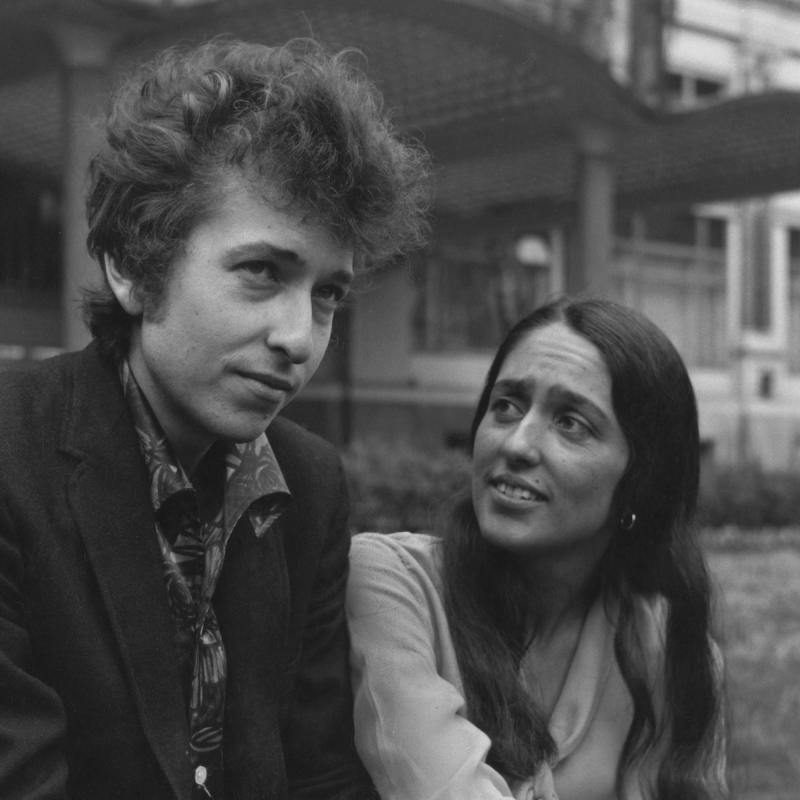
As a teenager at the beginning of her folk career, Joan Baez played mostly sad, traditional songs. She later became an icon to teenage girls in the 1960s, played with Bob Dylan, and pursued political activism.
Linguist Geoff Nunberg unpacks worries about different kinds of cultural and technical illiteracy--which he believes could more accurately be described as ignorance. Nunberg says we should be more concerned with the often overlooked problem of functional illiteracy.
Jody Pinto is an installation artist whose work is inspired by the contours of the human body. Her newest piece, Fingerspan, is a bridge that extends throughout Philadelphia's Fairmount Park. It is her first major permanent work.